

With the help of this presentation, children learn to use different forms of the verb ‘to be’ (was/were) in positive and negative sentences. They will also learn how to ask and answer open and closed questions.
Download this informative PowerPoint with just a click of a button to teach children how to use adverbs of frequency in sentences (always, usually, often, sometimes, never). It is also great for consolidating the children’s knowledge of daily routine activities.

This bright and colourful presentation is perfect as an introduction to descriptive sentences and talking about people’s appearance. It focuses on facial features, hair, height and build.
This detailed PowerPoint will explain the difference between countable and uncountable nouns in a fun and interactive way. It also contains a number of activities to practise using both types of nouns in sentences.
This engaging PowerPoint presentation is the perfect way to introduce children to possessive adjectives in the context of careers and occupations. It features cute characters talking about their jobs as well as a number of fun activities aimed at practising the use of possessive adjectives in sentences.
This great PowerPoint focuses on the commonly used irregular plurals (children, men, women, teeth, feet, mice, geese etc.) and contains a number of activities to develop your students’ speaking skills.
Use this informative PowerPoint to learn about the Past Simple tense. It allows children to practise building sentences with regular and irregular verbs as well as asking open and closed questions in Past Simple.
There are many different ways a word can be changed to become a plural noun in English. This informative presentation clearly explains the rules of plural nouns and provides plenty of opportunities to practise them.
This beautifully illustrated PowerPoint focuses on different subjects taught at school. It also provides a useful bank of key words the children can use to talk about their most and least favourite subjects.
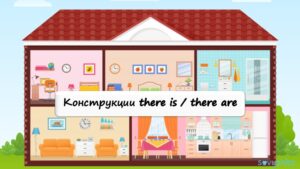
This fantastic presentation clearly explains how to structure sentences with There is/ There are. The bright colours and fantastic illustrations are great for keeping students engaged and helping them to practise their speaking skills.